


Red Rocks of Sedona Arizona
Reviewed and updated by AZ Leisure Staff Writers on
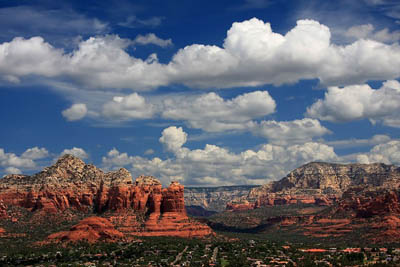
Sedona’s towering red rock buttes, mesas, spires and canyon walls define one of Arizona’s most recognizable landscapes. Famous formations such as Cathedral Rock, Bell Rock, Courthouse Butte and Coffee Pot Rock surround the community, creating dramatic views from scenic overlooks, hiking trails, resorts, restaurants and the banks of Oak Creek. Whether you come for photography, hiking, geology, scenic drives or Sedona’s well-known vortex sites, the red rocks are the centerpiece of the Sedona experience.
- How The Red Rocks Formed
- Famous Red Rock Formations
- Best Places For Red Rock Views
- Vortex Sites & Spiritual Significance
- Hiking Among The Red Rocks
- Red Rock Photo Gallery
- FAQ
How The Red Rocks of Sedona Formed
Sedona’s dramatic landscape is built from layers of sedimentary rock deposited hundreds of millions of years ago. Much of the area’s distinctive red scenery includes rocks of the Early Permian Schnebly Hill Formation, along with other sandstone, siltstone and limestone units exposed throughout the region.
Over immense spans of time, uplift, faulting and erosion by water and wind carved these rock layers into the cliffs, mesas, buttes, pinnacles and canyons visible today. Iron-bearing minerals within many of the sedimentary layers oxidized, helping produce the rich red, orange and rust colors that make Sedona’s landscape so distinctive.
Famous Sedona Red Rock Formations
Many of Sedona’s best-known formations have descriptive names inspired by their shapes. Some can be seen directly from town, while others are best appreciated from hiking trails, scenic overlooks and surrounding forest roads.
- Cathedral Rock — one of Sedona’s most photographed landmarks
- Bell Rock — a prominent bell-shaped formation south of Sedona
- Courthouse Butte — a massive formation near Bell Rock
- Coffee Pot Rock — a distinctive formation visible from West Sedona
- Airport Mesa — a popular panoramic viewpoint overlooking the red rock landscape
- Chimney Rock — a recognizable formation northwest of central Sedona
- Snoopy Rock — named for its resemblance to the Peanuts character lying on his doghouse
- The Cockscomb — a dramatic ridgeline formation west of Sedona
Best Places To See The Red Rocks of Sedona
Sedona offers exceptional red rock views from both roadside overlooks and hiking areas. Airport Mesa is one of the easiest places to appreciate a broad panorama of the surrounding formations, while Cathedral Rock and Bell Rock provide closer views from their trail systems. Red Rock Crossing is especially well known for views of Cathedral Rock reflected in Oak Creek.
- Airport Mesa for panoramic views across Sedona
- Cathedral Rock for one of Sedona’s signature formations
- Bell Rock and Courthouse Butte south of Sedona
- Chapel of the Holy Cross for elevated red rock scenery
- Boynton Canyon for canyon and cliff scenery
- Red Rock Crossing for classic Cathedral Rock views beside Oak Creek
Sedona Vortex Sites & Spiritual Significance
The Sedona and Verde Valley region has a long Indigenous cultural history. Archaeological evidence documents centuries of occupation, and the descendants of Indigenous peoples connected with the region continue to live in Arizona today. Visitors should treat archaeological sites, cultural places and the surrounding landscape with respect.
Sedona is also internationally known for modern spiritual traditions centered on locations called vortex sites. Practitioners and visitors describe vortexes as places where concentrated energy may support meditation, reflection and personal renewal. These beliefs are part of Sedona’s contemporary spiritual culture rather than a geological classification.
The four best-known Sedona vortex locations are Airport Mesa, Bell Rock, Cathedral Rock and Boynton Canyon. Visitors can explore these areas independently or learn more through Sedona vortex tours and information.
Hiking Among Sedona’s Red Rocks
Hiking is one of the best ways to experience Sedona’s formations at close range. Trails range from short scenic walks to steep climbs and longer canyon routes, so choose a trail that matches your experience, fitness level and the day’s weather. Popular destinations include Cathedral Rock, Bell Rock, Boynton Canyon, Airport Mesa and numerous trails throughout Coconino National Forest.
Carry plenty of water, wear sturdy footwear and avoid exposed trails during extreme heat or thunderstorms. Parking at popular trailheads can fill early, especially during spring and fall. See our Sedona hiking trails and map for additional trail choices and planning information.
Sedona Red Rock Photo Gallery
The following Sedona red rock photographs are courtesy of Mike Koopsen.
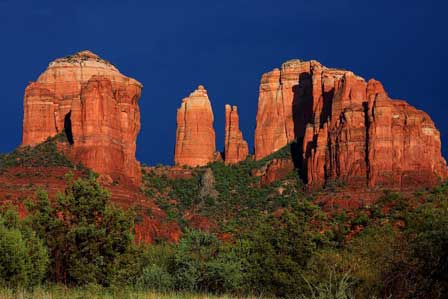 Cathedral Rock
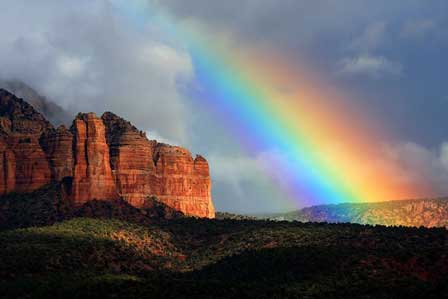 Rainbow Over Rabbit Ears
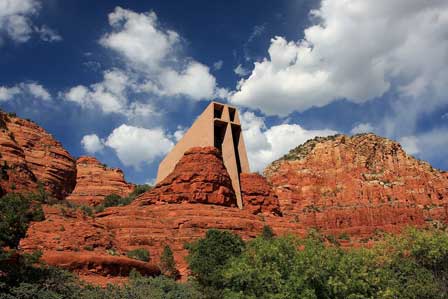 Chapel of the Holy Cross
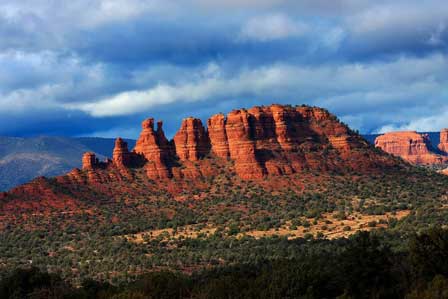 The Cockscomb
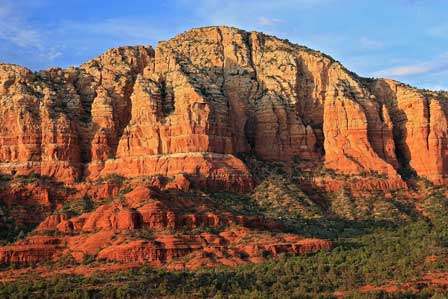 Lee Mountain
 Courthouse Butte
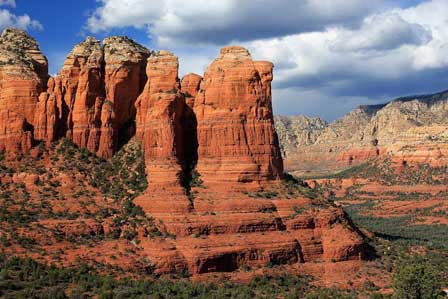 Coffee Pot Rock
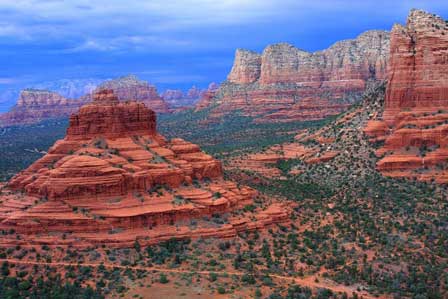 View of Bell Rock
Most Popular Sedona Red Rock Landmarks
See more photos of Sedona’s red rocks, including Oak Creek scenery, fall color and occasional snow-covered formations during winter.
Red Rocks of Sedona FAQ
Why are the rocks in Sedona red?
Many of Sedona’s sedimentary rocks contain iron-bearing minerals that oxidized over time, contributing to the red, orange and rust colors visible throughout the landscape.
How old are Sedona’s red rocks?
Many of the prominent sedimentary rock layers exposed around Sedona are hundreds of millions of years old. The Schnebly Hill Formation, an important part of the local red rock landscape, dates to the Early Permian Period roughly 275 million years ago.
What are the most famous red rock formations in Sedona?
Cathedral Rock, Bell Rock, Courthouse Butte and Coffee Pot Rock are among Sedona’s best-known formations. Airport Mesa, Boynton Canyon and the Chapel of the Holy Cross area also provide outstanding red rock scenery.
Where is the best panoramic view of Sedona’s red rocks?
Airport Mesa is one of the most accessible places for broad panoramic views across Sedona and its surrounding formations. Other popular viewpoints include Red Rock Crossing, Bell Rock and overlooks along area trails and scenic roads.
Can you hike on the red rocks in Sedona?
Yes. Numerous designated hiking trails travel through Sedona’s red rock landscape. Popular hiking areas include Cathedral Rock, Bell Rock, Boynton Canyon and Airport Mesa. Stay on designated trails and follow current land-management regulations.
What are the main Sedona vortex sites?
The four best-known vortex locations are Airport Mesa, Cathedral Rock, Bell Rock and Boynton Canyon. They are associated with modern spiritual beliefs about concentrated energy and are also popular because of their scenic settings.
Is Cathedral Rock a vortex site?
Yes. Cathedral Rock is widely recognized as one of Sedona’s four principal vortex locations and is also one of the area’s most photographed geological landmarks.
What is the best time to photograph Sedona’s red rocks?
Early morning and late afternoon often produce the richest color because low-angle sunlight emphasizes the red and orange tones of the rock formations. Sunset is especially popular at elevated viewpoints such as Airport Mesa.
Are Sedona’s red rocks part of the Grand Canyon?
No. Sedona and the Grand Canyon are separate landscapes, although both expose ancient sedimentary rocks of the Colorado Plateau region and surrounding transition zones.
Can you see Sedona’s red rocks without hiking?
Yes. Many formations can be seen from streets, scenic highways, overlooks and developed attractions. Airport Mesa, State Route 179 and several roadside viewpoints provide impressive scenery without requiring a long hike.
See All Sedona Has To Offer
Sedona Annual Events
Grasshopper Point
Sedona In Autumn
Directions To Sedona
Directions From Phoenix
Red Rock Sycamore Loop
Sedona Tours
Sedona Air Tours
Chapel Of The Holy Cross
Miles From Sedona
Arizona State Map
Shuttles & Transportation
Sedona Pictures
More Sedona Pictures
Sedona Video
About Sedona











