


Native American Ruins & Petroglyphs Near Sedona
Reviewed and updated by AZ Leisure Staff Writers on
The Sedona and Verde Valley area preserves remarkable evidence of Indigenous life spanning many centuries, including cliff dwellings, pueblos, petroglyphs and pictographs. Visitors can explore protected heritage sites such as Palatki, Honanki, Montezuma Castle and V-Bar-V while learning about the people who lived here and the Native American communities whose connections to this landscape continue today.
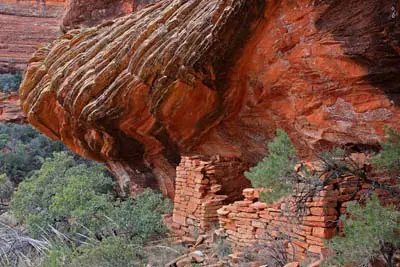 Ancient cliff dwelling ruins near Sedona. © Mike Koopsen
Ancient History Of The Sedona & Verde Valley Area
Sedona's red-rock country and the surrounding Verde Valley have been home to Indigenous peoples for thousands of years. Archaeologists use the name Sinagua for communities that lived throughout northern and central Arizona, including the Verde Valley, where they built pueblos and cliff dwellings and created extensive rock art.
The Southern Sinagua tradition flourished in the Verde Valley for centuries before communities began moving away from many settlements during the late 1300s and early 1400s. They did not simply disappear. Archaeological evidence and Indigenous traditions connect these migrations with later Puebloan communities, while Yavapai and Apache peoples also have deep historical and cultural ties to the region.
Today, cliff dwellings, pueblos, petroglyphs and pictographs remain throughout the Sedona and Verde Valley landscape. Many are protected archaeological and cultural resources. Visitors should explore only established public heritage sites, remain on designated trails and leave artifacts, rock art and structures exactly as they are found.
Native American Heritage Sites Near Sedona
Several protected archaeological and rock-art sites in the Sedona and Verde Valley area are open to visitors. Access, fees, reservations, hours and road conditions vary by location and can change seasonally, so check current National Park Service or U.S. Forest Service information before your visit.
Montezuma Castle National Monument
Montezuma Castle, near Camp Verde south of Sedona, protects one of the Verde Valley's best-preserved cliff dwellings. Construction began around 1100 CE, and the multi-story structure contains about 20 rooms. Visitors view the dwelling from a short paved trail; entering the cliff dwelling is not permitted. Read more about the history of Montezuma Castle.
Palatki Heritage Site
Palatki Heritage Site, west of Sedona, preserves a Southern Sinagua cliff dwelling along with extensive rock art representing different periods of human occupation in the Verde Valley. Visits are managed to protect the archaeological resources, and reservations may be required. Learn more about the Palatki Heritage Site near Sedona.
Honanki Heritage Site
Honanki Heritage Site is another important Southern Sinagua archaeological site west of Sedona. It includes cliff dwellings dating primarily from approximately 1100 to 1300 CE along with rock art, including pictographs. Road conditions can be rough, so visitors should check current access information before traveling to the site.
V-Bar-V Petroglyph Heritage Site
V-Bar-V Petroglyph Heritage Site is known for rock art rather than cliff dwellings. The site protects a large concentration of petroglyphs created on sandstone panels in the Verde Valley. Interpretive information helps visitors understand the symbols and archaeological context of the site. Learn more about the V-Bar-V Petroglyph Heritage Site.
Petroglyphs & Rock Art Near Sedona
Rock art is an important part of the archaeological landscape around Sedona and the Verde Valley. Petroglyphs are images pecked, carved or scratched into rock surfaces, while pictographs are painted images. Both can be seen at protected heritage sites in the region, including Palatki, Honanki and V-Bar-V.
These images are cultural resources rather than decorations or modern graffiti. Avoid touching, tracing, rubbing or wetting rock art for photographs, because even seemingly minor contact can damage fragile surfaces and affect resources that have survived for centuries.
Help Protect Sedona's Heritage Sites
Archaeological sites and rock art are protected cultural resources. Visit only areas open to the public, stay on designated trails and follow posted instructions. Do not climb or sit on ancient walls, touch or mark rock art, remove pottery fragments or other artifacts, stack rocks or leave offerings.
If you encounter an archaeological feature or artifact away from a developed site, leave it where it is and avoid publicizing its exact location. Protecting these places allows future visitors, archaeologists and descendant communities to continue learning from and caring for them.
Video: Ancient Ruins Near Sedona
Video courtesy of Cheyenne L. Rouse.
Sedona Native American Ruins FAQ
Are there Native American ruins near Sedona?
Yes. The Sedona and Verde Valley area contains numerous archaeological sites, including protected cliff dwellings, pueblos and rock-art locations. Publicly accessible sites include Palatki, Honanki, Montezuma Castle and V-Bar-V.
Who built the ancient cliff dwellings near Sedona?
Archaeologists commonly use the term Southern Sinagua for many of the communities that built and occupied pueblos and cliff dwellings in the Verde Valley from roughly the late first millennium through the 1300s and early 1400s.
What happened to the Sinagua people?
The Sinagua did not simply disappear. Communities migrated from settlements in the Verde Valley over time, and archaeological evidence and Indigenous traditions connect these migrations with descendant Puebloan peoples and other Native communities of the Southwest.
Can visitors enter the ruins at Montezuma Castle?
No. Visitors view Montezuma Castle from the designated trail below the cliff dwelling. Public entry into the structure is not permitted in order to protect the fragile archaeological site.
Do you need reservations to visit Palatki?
Palatki Heritage Site commonly requires advance reservations because visitation is managed to protect the archaeological resources. Check current U.S. Forest Service information before visiting because procedures, operating hours and access conditions can change.
Can you take pottery or artifacts found near Sedona ruins?
No. Artifacts and archaeological resources should be left exactly where they are found. Removing or disturbing them damages the archaeological record and may violate federal law on protected public lands.
Things To Do & Experience In Sedona











