

Montezuma Castle National Monument
Reviewed and updated by AZ Leisure Staff Writers on
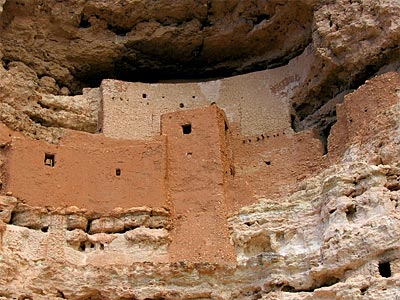
Montezuma Castle National Monument near Camp Verde, Arizona preserves one of the best-known cliff dwellings in the Verde Valley. Built into a limestone alcove about 90 feet above the valley floor, the five-story structure contains approximately 20 rooms and was occupied by people archeologists call the Southern Sinagua. Despite its name, the site has no connection to the Aztec emperor Montezuma and is not a castle in the traditional sense.
- Montezuma Castle Overview
- History & Culture
- What To See
- Trail & Accessibility
- Hours & Fees
- Montezuma Well
- Directions & Map
- Visitor Tips
- FAQ
Montezuma Castle National Monument Overview
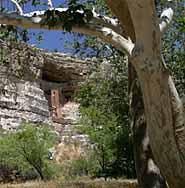
Montezuma Castle rises five stories within a natural limestone alcove overlooking Beaver Creek. Its approximately 20 rooms once housed multiple families, making the structure more comparable to an ancient apartment building than a castle.
The dwelling was constructed using locally available limestone, clay mortar, wooden beams and other natural materials. Interior ladders connected different floors, while the elevated alcove helped protect the structure from flooding and contributed to its remarkable preservation.
History & Culture of Montezuma Castle
People lived in the Verde Valley long before Montezuma Castle was constructed. Archeologists use the name Southern Sinagua for the people associated with Montezuma Castle, Tuzigoot and other dwellings in the region, although the National Park Service notes that we do not know what these people called themselves.
Permanent Sinagua settlements developed in the region beginning around 1050 CE, and Montezuma Castle was first constructed during the early 1100s. The people who lived here farmed, traded, created pottery and textiles, and used the waters and fertile lands of the Verde Valley to support their communities.
By about 1400 to 1425 CE, the dwellings at Montezuma Castle were no longer occupied. The precise reasons remain uncertain. Archeological evidence and Indigenous traditions indicate that people migrated and became part of other communities rather than simply disappearing.
What To See at Montezuma Castle
The Montezuma Castle Visitor Center includes a small museum with exhibits that help explain the people, archeology and natural setting of the monument. Artifacts and interpretive displays provide additional context for understanding everyday life in the Verde Valley.
Outside the visitor center, the paved loop trail passes beneath Arizona sycamores and offers clear views of Montezuma Castle and other archeological features. Visitors view the main dwelling from below; public access inside the cliff dwelling was discontinued in 1951 to protect the fragile structure.
Montezuma Castle Trail & Accessibility
A paved 0.3-mile loop trail begins at the visitor center and passes through a shaded riparian area beneath the cliff dwelling. The main loop has minimal elevation change and is wheelchair and stroller accessible, with benches and shade structures available along the route.
Leashed pets are permitted on the trails but must remain on a leash no longer than six feet. Pets generally are not permitted inside the visitor center except as allowed by current National Park Service rules. Visitors must remain on designated trails and may not climb on or enter the archeological structures.
There is no campground at Montezuma Castle National Monument, although camping and lodging are available elsewhere in the Camp Verde and Verde Valley area. A picnic area is available for visitors, and additional lodging and visitor services can be found in Camp Verde, Cottonwood and Sedona.
Montezuma Castle Hours & Entrance Fees
Montezuma Castle National Monument is generally open during daytime hours, but operating schedules and holiday closures can change. An entrance fee applies to most visitors age 16 and older, while qualifying National Park passes are accepted.
Before visiting, check the official National Park Service Montezuma Castle information for current hours, entrance fees, holiday closures and alerts.
Montezuma Well
Montezuma Well is a separate unit of Montezuma Castle National Monument located north of the Castle. The natural limestone sinkhole has supported people and wildlife for centuries and contains cliff dwellings, pueblo remains and a prehistoric irrigation canal.
Montezuma Well is reached by a separate entrance and is not visible from Montezuma Castle. Visitors interested in the broader history of the Verde Valley can combine both locations in the same trip. Check current National Park Service information for access, hours and trail conditions before visiting.
Directions To Montezuma Castle
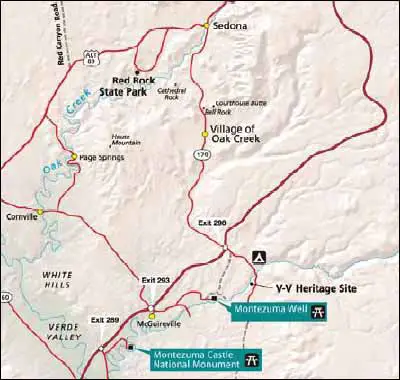
From Phoenix. Travel north on Interstate 17 to Exit 289. Drive east approximately one-half mile through the traffic circles to the blinking red light, then turn left onto Montezuma Castle Road and follow it to the visitor center.
From Flagstaff. Travel south on Interstate 17 to Exit 289, then drive east approximately one-half mile to the blinking red light and turn left onto Montezuma Castle Road.
From Sedona. Travel south from Sedona toward Interstate 17, then follow I-17 south to Exit 289. Continue east approximately one-half mile and turn left onto Montezuma Castle Road.
The monument’s physical address is 2800 Montezuma Castle Road, Camp Verde, Arizona 86322.
Map To Montezuma Castle
Tips For Visiting Montezuma Castle
- Allow approximately 30 to 60 minutes for the visitor center and main loop trail.
- Check current National Park Service hours, fees and alerts before leaving for the monument.
- Bring water, sun protection and comfortable walking shoes, especially during warmer months.
- Stay on the paved trail and never climb on or enter archeological structures.
- Keep pets leashed and follow current National Park Service pet regulations.
- Summer afternoon thunderstorms can temporarily close trails when lightning is nearby.
- Consider combining your visit with Montezuma Well, Camp Verde or other Verde Valley attractions.
Montezuma Castle National Monument FAQ
Where is Montezuma Castle National Monument?
Montezuma Castle National Monument is located near Camp Verde in central Arizona at 2800 Montezuma Castle Road. It is southeast of Sedona and reached from Interstate 17 at Exit 289.
Is Montezuma Castle really a castle?
No. Montezuma Castle is a five-story, approximately 20-room cliff dwelling that housed multiple families. Early European American settlers gave the site its misleading name.
Did the Aztec emperor Montezuma live at Montezuma Castle?
No. Neither Montezuma nor the Aztecs had a known connection with the site. Montezuma II was born after the people who occupied the dwelling had already left the Verde Valley.
Who built Montezuma Castle?
The dwelling was built and occupied by people archeologists refer to as the Southern Sinagua. The National Park Service notes that we do not know what these people called themselves.
How old is Montezuma Castle?
Construction of Montezuma Castle began during the early 1100s, and people occupied dwellings in the area until approximately 1400 to 1425 CE.
Can visitors go inside Montezuma Castle?
No. Visitors view the dwelling from the trail below. Public access inside Montezuma Castle ended in 1951 to help protect the fragile structure.
How long is the Montezuma Castle trail?
The main loop trail is approximately 0.3 mile long. It is paved with minimal elevation change and is accessible to wheelchairs and strollers.
Are dogs allowed at Montezuma Castle?
Leashed pets are permitted on the trails subject to current National Park Service regulations. Pets generally are not allowed inside the visitor center except as permitted by park rules.
Is there an entrance fee for Montezuma Castle?
Yes. An entrance fee applies to most visitors age 16 and older, while younger visitors and qualifying pass holders may enter without an additional fee. Check the National Park Service website for current rates.
What is Montezuma Well?
Montezuma Well is a separate unit of Montezuma Castle National Monument. The natural limestone sinkhole contains archeological sites, cliff dwellings and a prehistoric irrigation canal and is reached from a separate entrance north of the Castle.
Attractions In The Sedona Area











